01 · The price
Your prices, not an average of somebody’s
A calculator that guesses is worse than no calculator: the client believes the number and you have to talk them down from it. So before it quotes anything, it puts a handful of real tattoos in front of you and asks what you would charge — and everything it says afterwards is built out of your own answers.
- 1
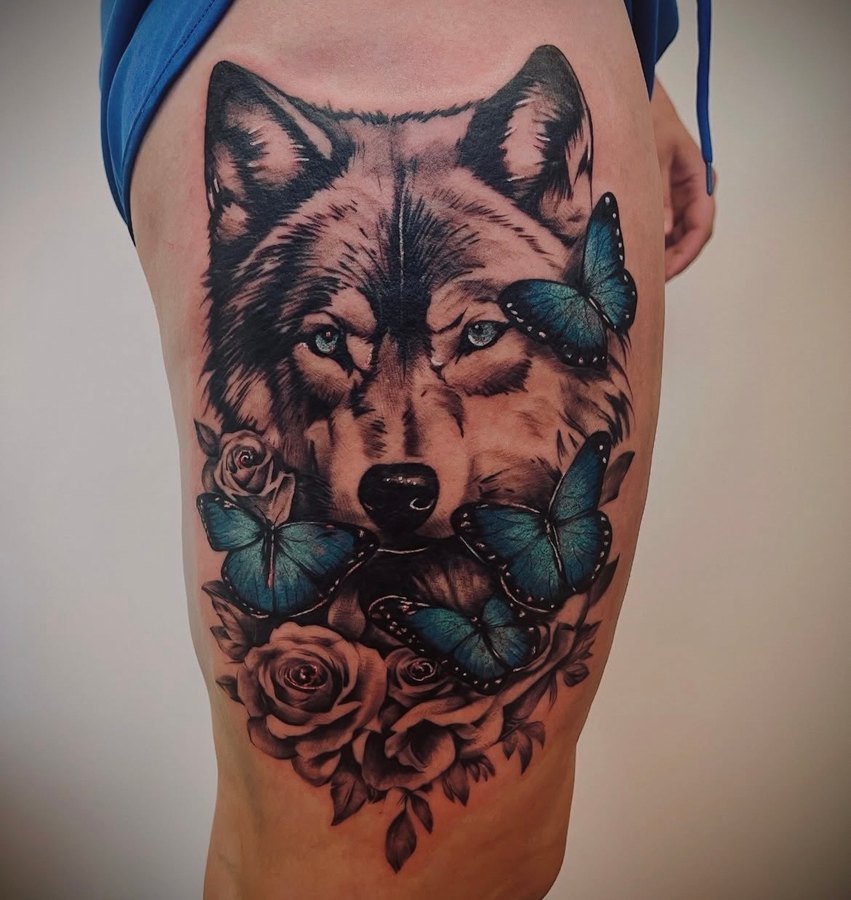
A few real pieces, from a small one to a full back
What you would charge for each, and how many hours you would take. A few minutes, and you upload nothing.
- 2
Your hourly rate falls out of the smallest one
Nothing is discounted on a small piece, so that is where your real rate is. The bigger ones are cheaper by the hour, and the difference becomes your long-job discounts — shown to you as a ladder before you agree to it.
- 3
Hours, not square centimetres
A photo is measured against your own answers to work out how long the piece takes, and the price is those hours at your rate. Setup and stencil time do not scale with the drawing, which is exactly why one flat rate never worked.
- 4
Then the things a measurement cannot see
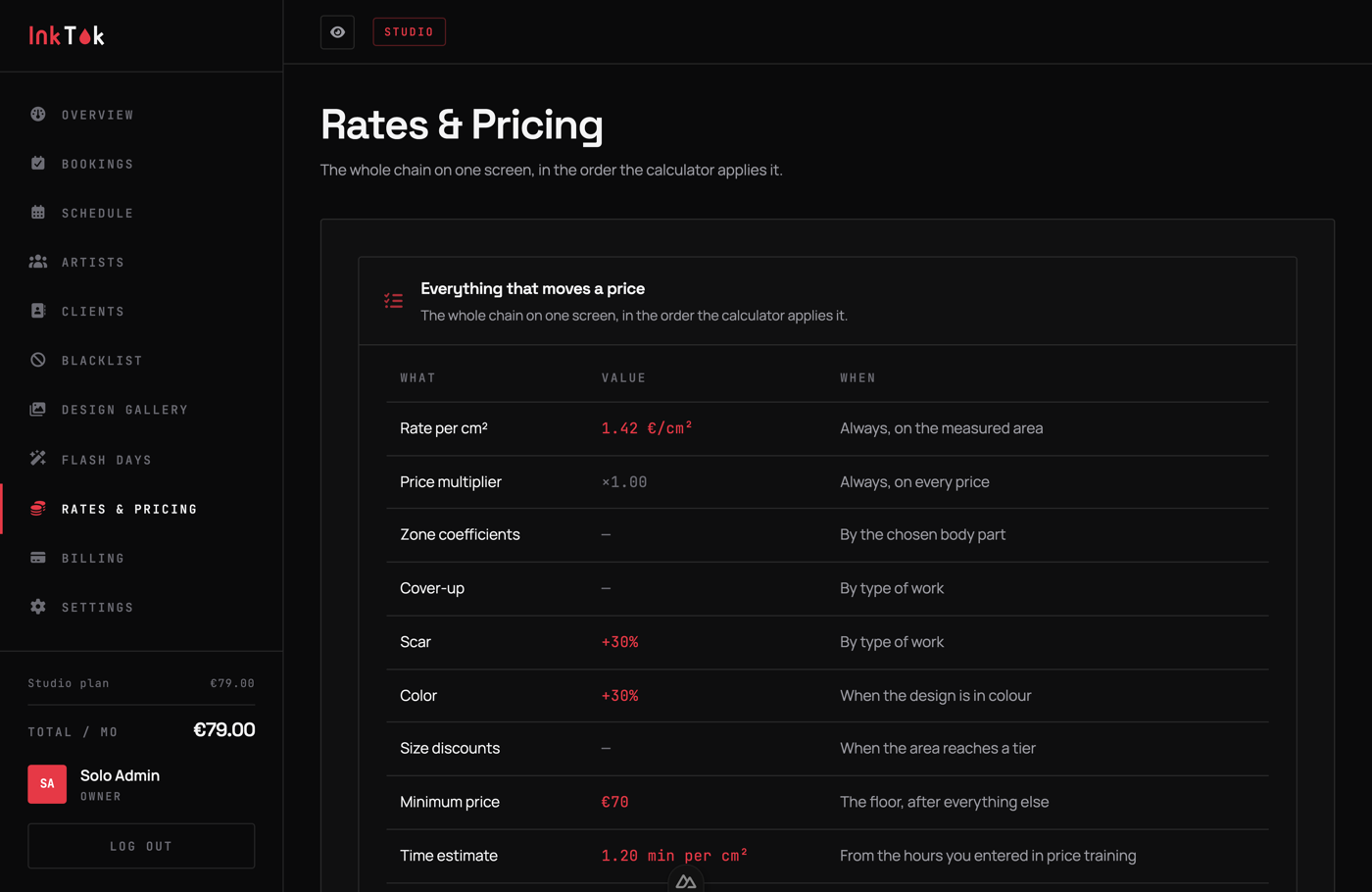
One slider per body part, one per style you work in: colour realism is not the same four hours as fine-line, and a palm is not a forearm. Every figure is yours, every one ships at ×1.00, and the trade’s usual number is one tap away.
Nothing is blank when you start. The hourly rates, the body-zone coefficients and the style multipliers are already loaded from what studios around the world actually charge — you can go live on those today. Your discounts for longer sittings come from your own answers during setup, and pricing a few reference pieces tunes the rest to you. Every single number stays yours to change.
The number is an estimate and says so. You confirm the final price when you have seen the request — the point is that nobody is waiting on you to find out roughly what it costs.